The world of rallying still feels the absence of Colin McRae, two decades after the helicopter crash that claimed his life on September 15, 2007. The Scottish driver, whose name became synonymous with fearless driving and flamboyant style, left an indelible mark on the World Rally Championship (WRC) and motorsport as a whole. His legacy transcends statistics, though his 25 WRC victories and 1995 world title remain towering achievements. McRae wasn’t just a champion; he was a cultural icon who reshaped rallying’s appeal for a generation.
The McRae Effect: Redefining Rally Driving
Before McRae, rally drivers were often seen as calculated technicians, masters of pace notes and precision. Colin brought something different—raw aggression mixed with sublime car control. His approach was visceral, often pushing his Subaru Impreza to the absolute limit, and sometimes beyond. Fans adored him for it. The term "McRae moment" entered the lexicon, describing those heart-stopping instances where he’d save a car from certain disaster with impossible reflexes. His driving wasn’t just fast; it was theatrical, turning each stage into a spectacle.
This style didn’t just win races—it won hearts. McRae’s rivalry with Carlos Sainz in the mid-1990s, particularly during their epic battles in the iconic blue-and-yellow Subarus, became the stuff of legend. His 1995 championship victory, achieved with a do-or-die drive on the final rally in Britain, encapsulated his career: brilliant, unpredictable, and utterly compelling. Even in defeat, McRae was magnetic. His near-misses in 1996, 1997, and 2001 only added to his mythos, painting him as a tragic hero who gave everything to the sport.
Beyond the Stages: The Video Game Phenomenon
McRae’s influence extended far beyond gravel and tarmac. The Colin McRae Rally video game series, launched in 1998, introduced millions to rallying’s thrills. Its realistic physics and McRae’s digital persona made it a benchmark for racing games. For many young fans, this was their first exposure to WRC, and McRae became their gateway driver. The franchise’s success (later rebranded as Dirt) cemented his status as a crossover star, blending virtual and real-world motorsport in a way few athletes had achieved.
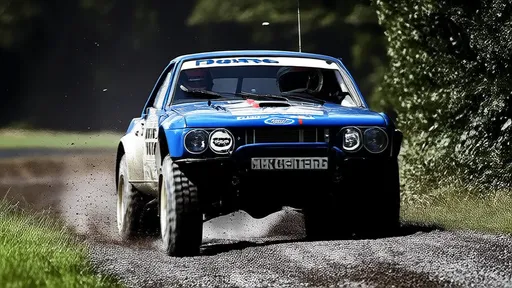
His charisma translated effortlessly to marketing, too. That iconic blue Subaru with the 555 livery, sideways through a forest, became one of rallying’s most enduring images. McRae understood the importance of showmanship, whether it was his helmet-less podium appearances or his candid interviews. In an era before social media, he connected with fans through sheer authenticity—a trait that made his loss even more profound.
A Family’s Rallying Dynasty
The McRae name carried weight long before Colin’s rise. His father, Jimmy, was a five-time British Rally Champion, and younger brother Alister also competed in WRC. This familial thread wove through Colin’s career, grounding him even as fame grew. His son, Johnny, though just five years old at the time of the crash, later pursued rallying, ensuring the McRae legacy continued. The tragic deaths of Colin, Johnny, and two family friends in the helicopter accident cast a shadow, but the family’s resilience—seen in initiatives like the McRae Rally Challenge charity event—honors their spirit.
Colin’s influence also lives on through drivers he inspired. Sébastien Loeb, the nine-time WRC champion, cited McRae as a childhood hero. Current stars like Elfyn Evans and Kalle Rovanperä grew up watching his highlights. His aggressive yet fluid technique remains a reference point for coaches. Modern rally cars, with their aerodynamics and hybrid systems, are worlds apart from the Group A machines McRae drove, but the ethos he embodied—pushing boundaries with style—still defines the sport’s soul.
The Unfinished Chapter
McRae’s post-WRC career hinted at unfulfilled potential. His 2004 Dakar Rally debut showed promise, and his Le Mans 24 Hours appearances revealed adaptability. Had he lived, roles as a team principal, mentor, or even a rally ambassador seemed inevitable. Instead, his legacy exists in fragments: YouTube compilations of his wild saves, tributes at Goodwood Festival of Speed, and the occasional blue Subaru roaring through a historic rally event.
Twenty years on, the question isn’t just what McRae achieved, but what rallying lost. In an age where motorsport risks becoming overly sanitized, his unscripted brilliance feels more vital than ever. The WRC’s current era, for all its technical marvels, still searches for a figure who can electrify audiences like McRae did. Perhaps that’s the truest testament to his legacy—no one has truly replaced him.
Fans still leave flowers at the crash site near Lanark, Scotland. Older spectators swap stories of seeing him live, while younger ones discover him through grainy footage. Colin McRae was more than a driver; he was rallying’s rockstar, a man who made the impossible look effortless and the reckless look calculated. Two decades may have passed, but in the roar of a sideways Impreza or the pixels of a video game, he’s still very much alive.
By /Jun 15, 2025
By /Jun 15, 2025
By /Jun 15, 2025
By /Jun 15, 2025
By /Jun 15, 2025
By /Jun 15, 2025
By /Jun 15, 2025
By /Jun 15, 2025
By /Jun 15, 2025
By /Jun 15, 2025

By /Jun 15, 2025
By /Jun 15, 2025
By /Jun 15, 2025

By /Jun 15, 2025
By /Jun 15, 2025
By /Jun 15, 2025
By /Jun 15, 2025
