The automotive world stands at a crossroads, where the roar of internal combustion engines is gradually being drowned out by the silent hum of electric motors. In this era of transition, the Lotus Emira emerges not just as another sports car, but as a poignant farewell to an era defined by petrol-powered exhilaration. This isn't merely a vehicle; it's a statement, a celebration, and perhaps most importantly, a swan song for the analog driving experience.
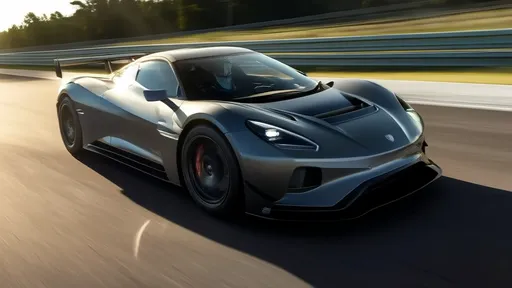
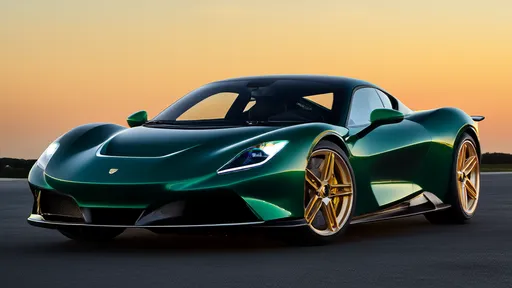
From the moment you lay eyes on the Emira, its intentions are clear. The design language speaks volumes about Lotus's philosophy – uncompromising purity. The low-slung profile, the muscular haunches, and the aggressive front end all scream performance, but there's an elegance here that sets it apart from the brute-force aesthetics of some competitors. The Emira doesn't need to shout; its presence alone commands attention.
What makes the Emira particularly special is its timing. As manufacturers rush to electrify their lineups, Lotus has chosen this moment to perfect the traditional sports car formula. The Emira represents the culmination of decades of knowledge in lightweight construction and handling dynamics, arriving just as these virtues become endangered in the industry. It's as if Lotus looked at the automotive landscape and decided to create the definitive internal combustion sports car before the curtain falls.
Beneath that sculpted hood lies a choice of two powerplants that each tell their own story. The first is a turbocharged 2.0-liter four-cylinder developed with AMG, offering 360 horsepower with a character that's more refined than raw. The alternative is the supercharged 3.5-liter V6 from the Exige and Evora, now producing 400 horsepower in its final iteration. These engines represent different philosophies within the petrol-powered paradigm, giving buyers options in how they want to experience what might be their last purely internal combustion sports car.
The driving experience is where the Emira truly separates itself from the pack. Unlike many modern sports cars that insulate the driver behind layers of electronic intervention, the Emira maintains that crucial connection between human and machine. The steering is unassisted in the purest Lotus tradition, delivering feedback that's become increasingly rare in an age of electric power steering systems. The manual gearbox option (a six-speed for the V6) keeps the driver engaged in the process of driving, rather than just pointing the car down the road.
Yet the Emira isn't stuck in the past. The interior represents a significant leap forward for Lotus, with quality materials and modern technology that finally match the car's dynamic capabilities. The digital instrument cluster and touchscreen infotainment system bring the car into the present day, while still maintaining a driver-focused layout. It's this balance between tradition and modernity that makes the Emira such a compelling proposition – it honors Lotus's heritage while acknowledging that even enthusiasts appreciate certain comforts.
The chassis is where decades of Lotus expertise shine brightest. The aluminum architecture provides exceptional rigidity while keeping weight impressively low – around 3,100 pounds depending on specification. Combined with double-wishbone suspension at all four corners, the Emira delivers handling that's both razor-sharp and surprisingly compliant. This isn't a one-trick pony that only works on smooth racetracks; it's a car that can devour backroads while remaining composed enough for daily driving.
Perhaps most telling about the Emira's significance is how it's being received in the industry. Journalists and enthusiasts alike are treating it not just as another new model launch, but as an event – the last chance to experience a certain kind of automotive purity. Orders have reportedly been strong, suggesting that many buyers recognize this might be their final opportunity to own a new, purely petrol-powered Lotus sports car before the company shifts focus to its electric future.
The Emira's development story adds another layer to its significance. This is the last Lotus to be developed under the guidance of legendary engineer Matt Becker, who has since moved to Aston Martin. It represents the final flowering of a particular school of British sports car engineering before the company's new Chinese owners steer it in a different direction. There's a sense that the Emira is the last of its kind in more ways than one – the last purely petrol Lotus, the last developed by this particular team, and possibly the last of an entire philosophy of sports car design.
Looking at the broader context makes the Emira's existence even more remarkable. With tightening emissions regulations and the industry's headlong rush toward electrification, developing an all-new internal combustion sports car in the 2020s is an act of defiance. Lotus could have easily skipped this generation, moving straight from the aging Evora to their upcoming electric models. That they chose to create the Emira speaks volumes about their commitment to giving the internal combustion engine a proper send-off.
The Emira's pricing positions it as an intriguing alternative to established players like the Porsche 718 Cayman. While not inexpensive, it offers something increasingly rare in its price bracket – a completely uncompromised driving experience. Where many competitors have gradually softened their edges to appeal to broader audiences, the Emira proudly maintains its sharpness. In doing so, it serves as a reminder of what made Lotus special in the first place, and what the automotive world stands to lose as we transition to electrification.
As we look toward an electric future filled with instant torque and silent operation, cars like the Emira take on new significance. They represent the end of a mechanical era, where driving pleasure came from mastering a machine rather than being propelled by one. The smells, the sounds, the vibrations – these sensory elements that have defined the sports car experience for over a century are all present in the Emira in their purest form. Future generations may look back on this car as marking the end of an era, making it potentially more significant than even its creators intended.
Ultimately, the Lotus Emira isn't just another sports car. It's a time capsule preserving everything that made petrol-powered driving special right before the industry changed forever. For enthusiasts, it represents both a celebration and an opportunity – one last chance to experience a certain kind of purity before the rules change. In decades to come, we may look back on the Emira as the perfect farewell to the internal combustion sports car, created by a company that understood better than most what made them great in the first place.
By /Jun 15, 2025
By /Jun 15, 2025
By /Jun 15, 2025
By /Jun 15, 2025
By /Jun 15, 2025
By /Jun 15, 2025
By /Jun 15, 2025
By /Jun 15, 2025
By /Jun 15, 2025
By /Jun 15, 2025
By /Jun 15, 2025
By /Jun 15, 2025
By /Jun 15, 2025
By /Jun 15, 2025
By /Jun 15, 2025
By /Jun 15, 2025
By /Jun 15, 2025
