The roar of a Porsche engine echoing through the Sarthe countryside is one of motorsport's most evocative sounds. But in 2023, that familiar wail carried something new - the whirr of hybrid energy recovery systems underpinning Porsche's long-awaited factory return to top-level endurance racing. The 963 LMDh represents not just another chapter in Stuttgart's racing legacy, but a technological manifesto for the future.
When Porsche last won Le Mans outright in 2017 with the 919 Hybrid, it marked the end of an era. The subsequent withdrawal from LMP1 left fans wondering if they'd ever see works Porsche prototypes battling for overall victories again. Six years later, the answer arrived wearing the iconic number 75 - celebrating the brand's anniversary with a car that blends cutting-edge hybrid technology with unmistakable Porsche DNA.
Developing the 963 became an exercise in balancing tradition with innovation. The LMDh regulations created a unique challenge - constructors must use one of four spec hybrid systems mated to a bespoke internal combustion engine, all wrapped in manufacturer-styled bodywork. Porsche's solution? A twin-turbocharged 4.6-liter V8 punching out around 670 horsepower, augmented by the mandatory 50hp hybrid boost. The powerplant's architecture nods to the successful RS Spyder engine while incorporating lessons from their Formula 1 program.
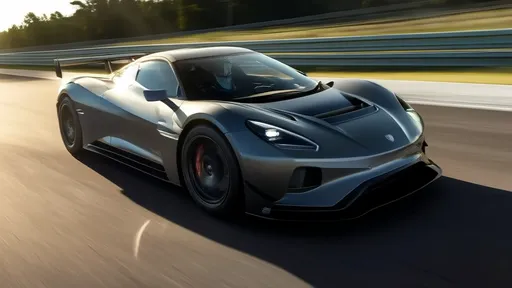
Visually, the 963 couldn't be anything but a Porsche. Designers consciously echoed the 956/962 silhouette that dominated 1980s sports car racing, particularly in the roofline and rear quarter proportions. The LED lighting signatures instantly communicate brand identity at night, while the livery - whether in factory white/red/black or Penske's yellow/black - makes the car unmistakable from grandstand distances. It's a masterclass in creating contemporary shapes that feel emotionally connected to heritage.
What truly sets the 963 apart is its operational ecosystem. Unlike the factory-run LMP1 effort, Porsche adopted a quasi-works approach by partnering with Team Penske for operational duties. This transatlantic alliance combines German engineering precision with America's most successful racing organization. The collaboration demands constant data sharing between Stuttgart, Penske's North Carolina base, and their European workshop in Mannheim - a logistical ballet performed across multiple time zones.
The hybrid system represents Porsche's biggest technical hurdle. Unlike their previous series-winning designs where the hybrid components were fully integrated, the LMDh rules mandate a spec Bosch motor-generator unit and Williams Advanced Engineering battery pack. Making these "sealed box" components work harmoniously with Porsche's bespoke elements required thousands of simulation hours. Early reliability issues at Daytona and Sebring proved how delicate this balance could be, making their subsequent victories at Laguna Seca and Road Atlanta even more impressive.
Drivers describe the 963 as quintessentially Porsche in its handling DNA - slightly tail-happy when pushed, but responsive to precise inputs. The hybrid deployment strategy offers intriguing tactical flexibility; teams can manually trigger the electric boost or let the system automatically deploy based on preset parameters. This creates fascinating intra-team variations - some drivers prefer aggressive energy use early in stints, while others conserve for defensive moves later.
Porsche's decision to simultaneously campaign factory cars while selling customer examples breaks new ground in top-tier prototype racing. By the 2024 season, up to eight 963s could be competing in IMSA and WEC events. This democratization of hybrid technology gives privateer teams like JDC-Miller and Proton Competition access to systems that were previously restricted to manufacturer megabudgets. However, maintaining performance parity between works and customer entries remains an ongoing challenge for Porsche's engineers.
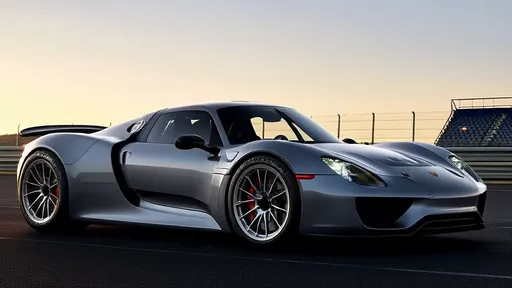
The 963's development trajectory mirrors Porsche's road car strategy. Just as the 918 Spyder hybrid hypercar paved the way for electrified production models like the Taycan, the LMDh program directly informs next-generation road-going performance hybrids. Track data about battery thermal management under racing conditions proves invaluable for civil applications. This technology transfer exemplifies Porsche's "competition breeds innovation" philosophy that's driven the company since its founding.
Looking ahead, the 963 platform appears poised for longevity. The current regulations cycle extends through at least 2027, allowing continuous evolution. Rumors suggest Porsche is already working on a significant aero revision for 2024 to address high-speed stability concerns. More crucially, the car's architecture can accommodate updated hybrid components as the rules permit, ensuring the 963 remains competitive throughout its lifespan.
For endurance racing fans, the sight of Porsche prototypes battling for overall wins again feels like the natural order restored. The 963 may carry hybrid hardware beneath its skin, but its soul remains unmistakably Porsche - a perfect fusion of heritage and progress. When the marque's anthem "Bad Boys for Life" blares over the PA system at Le Mans, it's no longer nostalgic; it's a declaration that Stuttgart's racing dynasty is writing its next glorious chapter.
Beyond stopwatch measurements, the 963's true success lies in how it honors Porsche's endurance racing legacy while embracing motorsport's electrified future. The car serves as a rolling testament to engineers who refuse to choose between tradition and innovation. In an era where many manufacturers treat racing as either a marketing exercise or technology testbed, Porsche continues to compete with the same intensity that made them legends. The 963 isn't just a car - it's the physical manifestation of a company's racing ethos.
As dusk falls at Le Mans and the 963s streak down the Mulsanne, their headlights painting hypnotic trails in the fading light, one can't help but feel Porsche is exactly where it belongs. The hybrid systems may represent motorsport's future, but the sight of those wide rear hips squatting through the Porsche Curves connects directly to the 917s and 956s of decades past. In this perfect moment, time collapses - the 963 isn't just continuing Porsche's endurance racing story; it's elevating it.
By /Jun 15, 2025
By /Jun 15, 2025
By /Jun 15, 2025
By /Jun 15, 2025
By /Jun 15, 2025
By /Jun 15, 2025
By /Jun 15, 2025
By /Jun 15, 2025
By /Jun 15, 2025
By /Jun 15, 2025
By /Jun 15, 2025
By /Jun 15, 2025
By /Jun 15, 2025
By /Jun 15, 2025
By /Jun 15, 2025
By /Jun 15, 2025
By /Jun 15, 2025
