Motorcycle Racing VS F1: A Full Comparison of Speed Differences on the Same Track

Jun 15, 2025 By

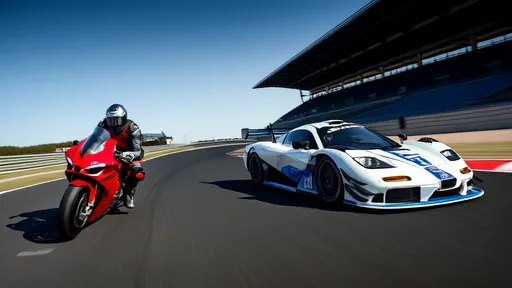
The world of motorsport is divided by distinct disciplines, each with its own engineering philosophy and performance envelope. Yet few comparisons spark as much debate as the hypothetical showdown between MotoGP motorcycles and Formula 1 cars on identical circuits. Beneath the surface spectacle of speed lies a fascinating interplay of physics, machinery, and rider versus driver skill that defies simple conclusions.

The Physics of Velocity

At first glance, F1 cars appear untouchable in outright pace. A modern Formula 1 machine can generate enough downforce to theoretically drive upside down in a tunnel at speed, allowing cornering forces that would cause most humans to black out. This aerodynamic mastery translates to blistering lap times, with current F1 cars lapping circuits like Silverstone's 5.9km layout in under 1:30. Meanwhile, MotoGP bikes - lacking wings or ground effects - must rely on tire grip and rider bravery to carve through the same corners at comparatively modest lean angles.

Yet raw cornering speed tells only half the story. The very mass that enables F1 cars to stick to the track becomes their enemy under acceleration. A MotoGP bike's power-to-weight ratio approaches 1.5hp/kg - nearly double that of even the most advanced F1 cars. This explains why 300+hp motorcycles can out-drag 1000+hp F1 machines from low speeds, with riders often carrying 10-15km/h higher exit speeds from slow corners before the F1 car's superior aero eventually claws back the advantage.

The Human Factor

Motorcycle racing introduces variables that simply don't exist in four-wheel competition. While F1 drivers endure brutal g-forces, their bodies remain cradled in carbon fiber safety cells with hydraulic suspension smoothing out bumps. MotoGP riders, by contrast, must use their own musculature as the suspension - absorbing every ripple in the tarmac while dangling off the bike at 60-degree leans. The physicality manifests differently; where F1 drivers train neck muscles to withstand cornering loads, riders develop freakish forearm endurance to maintain throttle control while their body weight tries to tear them from the handlebars.

Braking zones reveal another stark contrast. F1 cars can decelerate at over 5g thanks to massive carbon discs and sophisticated energy recovery systems. MotoGP bikes, limited by the need to prevent front-end washouts, typically peak around 1.5g of braking force. This forces riders to begin slowing earlier, yet their lighter machines require shorter distances to shed speed - creating passing opportunities where cars would be committed to their line.

Engineering Divergence

The technical regulations governing each series have created wildly different solutions to the same fundamental challenge: going faster. Formula 1's current hybrid power units represent perhaps the most complex engines ever built, with thermal efficiency figures surpassing 50% - better than most road car diesels. These 1.6L V6 turbos must harvest and deploy electrical energy while surviving multiple races at stratospheric rpm.

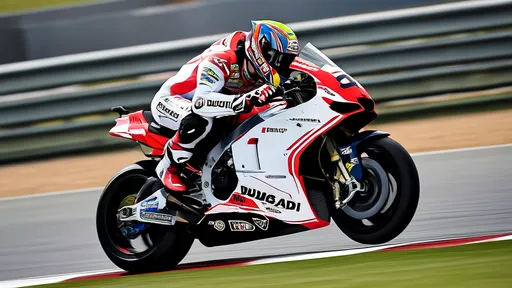
MotoGP's 1000cc prototypes take a more elemental approach. Without energy recovery or turbocharging, manufacturers extract 280+ horsepower from normally aspirated four-cylinder engines that scream to 18,000rpm. The lack of driver aids (traction control is far more primitive than in F1) places greater emphasis on mechanical grip and throttle control, creating a riding style that appears visibly more violent than the clinical precision of F1.

Circuit Specifics

Track layout dramatically influences the theoretical performance gap. At power circuits like Monza, F1 cars enjoy a 15-20 second per lap advantage over MotoGP bikes - the difference between Lewis Hamilton's 1:21.046 pole in 2020 and Fabio Quartararo's 1:39.060 bike lap record. Yet on tighter, more technical tracks like the Red Bull Ring, the gap shrinks to under 10 seconds as bikes exploit their agility through complex corner sequences.

Weather conditions further complicate comparisons. While F1 cars struggle immensely in wet conditions (modern aerodynamics making them particularly sensitive to standing water), MotoGP riders can adapt more progressively by adjusting body position and throttle application. The 2018 Argentine GP saw bikes circulating nearly 20 seconds faster than F1 managed in similar conditions earlier that year - one of the rare instances where two-wheeled machines held the outright pace advantage.

The Spectacle Factor

Pure lap times only partially capture why these machines captivate audiences differently. F1 delivers a sense of technological awe - the spectacle of machines operating at the bleeding edge of material science and fluid dynamics. The visual drama comes from the precision: cars hitting millimeter-perfect apexes at impossible speeds, their shapes sculpted by wind tunnels and supercomputers.

MotoGP offers visceral, human-scale drama. The sight of a rider's knee skimming the asphalt at 160km/h, or the way Valentino Rossi could visibly manhandle his Yamaha through corners, creates an immediate emotional connection that four-wheeled racing often struggles to match. Overtakes happen more frequently but require greater risk, as the narrow contact patches leave no margin for error when bikes run side-by-side.

Ultimately, the comparison serves not to crown a superior machine, but to highlight how different approaches to speed can coexist at motorsport's pinnacle. Whether it's the aerospace-inspired efficiency of F1 or the raw, rider-centric challenge of MotoGP, both represent the absolute limit of what's possible within their respective rulebooks - and more importantly, what humans can physically endure in pursuit of victory.
Recommend Posts
Auto

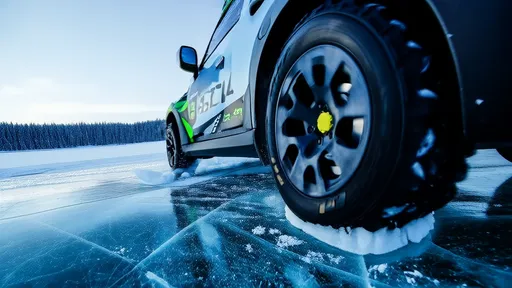
24-Hour Ice Rally: Tire Stud Tactics at -30°C

By /Jun 15, 2025

The world of motorsport is no stranger to extreme challenges, but few competitions push man and machine to their absolute limits like the annual 24-hour ice rally held in the frozen wilderness of northern Finland. This year's event saw temperatures plummet to -30°C (-22°F), creating conditions that would make even the most seasoned winter drivers think twice before hitting the accelerator.
Auto

NASCAR Next Gen Race Car: First Review of the Hybrid Power System

By /Jun 15, 2025

The long-awaited hybrid era of NASCAR racing has finally arrived, and the debut of the Next Gen car's hybrid powertrain has sent shockwaves through the motorsports world. After years of development and speculation, fans and teams alike got their first real taste of what this new technology brings to America's premier stock car racing series. The Charlotte Motor Speedway served as the stage for this historic unveiling, where the familiar roar of V8 engines now shares the spotlight with the whir of electric motors.
Auto

Motorcycle Racing VS F1: A Full Comparison of Speed Differences on the Same Track

By /Jun 15, 2025

The world of motorsport is divided by distinct disciplines, each with its own engineering philosophy and performance envelope. Yet few comparisons spark as much debate as the hypothetical showdown between MotoGP motorcycles and Formula 1 cars on identical circuits. Beneath the surface spectacle of speed lies a fascinating interplay of physics, machinery, and rider versus driver skill that defies simple conclusions.
Auto

The Path to Championship Defense: Ducati Desmosedici GP24's Corner Dominance"

By /Jun 15, 2025

The 2024 MotoGP season has unfolded as a masterclass in precision engineering and rider supremacy, with Francesco Bagnaia’s relentless campaign to defend his crown taking center stage. At the heart of this dominance lies the Ducati Desmosedici GP24, a machine that has redefined the limits of cornering performance in modern Grand Prix racing. While raw straight-line speed has long been Ducati’s calling card, this year’s iteration has elevated their game to new heights, particularly in the twisty sections where races are often won or lost.
Auto

2025 Dakar Route Announced: Sahara Desert Adds Devil's Dune"

By /Jun 15, 2025

The organizers of the Dakar Rally have once again raised the stakes for the 2025 edition, unveiling a route that promises to push competitors to their absolute limits. Among the most talked-about additions is the inclusion of the infamous "Devil's Dune" in the Sahara Desert, a monstrous sand formation that has long been whispered about in off-road racing circles but never before featured in the rally. This year's course is shaping up to be one of the most technically demanding in the event's storied history.
Auto

Porsche 963 LMDh: The Legend's Hybrid Vengeance

By /Jun 15, 2025

The roar of a Porsche engine echoing through the Sarthe countryside is one of motorsport's most evocative sounds. But in 2023, that familiar wail carried something new - the whirr of hybrid energy recovery systems underpinning Porsche's long-awaited factory return to top-level endurance racing. The 963 LMDh represents not just another chapter in Stuttgart's racing legacy, but a technological manifesto for the future.
Auto

20th Anniversary of Colin McRae's Passing: The Enduring Legacy of the WRC Legend

By /Jun 15, 2025

The world of rallying still feels the absence of Colin McRae, two decades after the helicopter crash that claimed his life on September 15, 2007. The Scottish driver, whose name became synonymous with fearless driving and flamboyant style, left an indelible mark on the World Rally Championship (WRC) and motorsport as a whole. His legacy transcends statistics, though his 25 WRC victories and 1995 world title remain towering achievements. McRae wasn’t just a champion; he was a cultural icon who reshaped rallying’s appeal for a generation.
Auto

F1 Budget Cap Controversy: The Domino Effect of Red Bull's Rule Violation

By /Jun 15, 2025

The Formula 1 paddock has been rocked by one of its most significant off-track controversies in recent memory - the Red Bull Racing cost cap breach that has sent shockwaves through the sport. What began as whispers in the Singapore Grand Prix paddock has exploded into a full-blown crisis threatening to undermine the credibility of F1's new financial regulations.
Auto

Hamilton Renews with Mercedes: Can the Dream of Eight Championships Still Be Achieved?

By /Jun 15, 2025

The motorsport world was set abuzz recently with the announcement that Lewis Hamilton had signed a multi-year contract extension with Mercedes-AMG Petronas Formula One Team. The seven-time world champion, now in his late thirties, has reignited the debate about whether he can surpass Michael Schumacher's legendary record and secure an unprecedented eighth championship title. As the 2024 season looms, questions linger: Can Hamilton and Mercedes rediscover their dominant form? Or has the window for an eighth crown already closed?
Auto

Mercedes-Benz EQXX Concept: The Black Technology for 1000-Kilometer Range

By /Jun 15, 2025

The automotive world has been buzzing with excitement since Mercedes-Benz unveiled its groundbreaking Vision EQXX concept car. This sleek, futuristic vehicle isn't just another pretty face in the crowded EV market - it represents a quantum leap in electric vehicle technology that could redefine our expectations for range, efficiency, and sustainable mobility.
Auto

BYD Blade Battery: How to Solve the Anxiety of Spontaneous Combustion?

By /Jun 15, 2025

The rise of electric vehicles (EVs) has been accompanied by a persistent concern among consumers: battery safety, particularly the risk of thermal runaway and fires. BYD, a leading Chinese automaker and battery manufacturer, has sought to address these fears with its innovative Blade Battery technology. Unlike conventional lithium-ion batteries, the Blade Battery promises not only higher energy density but also significantly improved safety, potentially redefining industry standards.
Auto

BMW iX3 vs NIO ES6: A Showdown Between Traditional Luxury and New-Age Automakers

By /Jun 15, 2025

The electric vehicle landscape is witnessing an intriguing clash between established automotive royalty and ambitious newcomers. Two models embodying this confrontation are the BMW iX3, representing German engineering tradition, and the NIO ES6, showcasing Chinese technological ambition. This comparison goes beyond mere specifications - it's a philosophical debate about what defines premium mobility in the electrified age.
Auto

Does the Horizontal Movement + Floating Water Mode Really Work on U8?

By /Jun 15, 2025

The BYD Yangwang U8 has been making waves in the automotive world, not just for its luxury off-road capabilities but also for its groundbreaking features—specifically, its lateral movement and floating mode. These innovations have sparked debates among enthusiasts and skeptics alike: Are these features genuinely useful, or are they just flashy gimmicks designed to grab headlines? To answer that, we need to delve deeper into the engineering behind them and examine real-world applications.
Auto

Lynk & Co 08 EM-P: Hybrid Breakthrough on CMA Evo Architecture

By /Jun 15, 2025

The automotive world is witnessing a quiet revolution in hybrid technology, and at the forefront stands the Lynk & Co 08 EM-P. This premium SUV represents more than just another addition to the growing lineup of electrified vehicles—it embodies a fundamental leap in hybrid architecture through its advanced CMA Evo platform. The marriage of cutting-edge engineering and thoughtful design philosophy makes this vehicle worth examining in detail.
Auto

Lotus Emira: The Swan Song of Petrol Sports Cars

By /Jun 15, 2025

The automotive world stands at a crossroads, where the roar of internal combustion engines is gradually being drowned out by the silent hum of electric motors. In this era of transition, the Lotus Emira emerges not just as another sports car, but as a poignant farewell to an era defined by petrol-powered exhilaration. This isn't merely a vehicle; it's a statement, a celebration, and perhaps most importantly, a swan song for the analog driving experience.
Auto

Hyundai Sonata N Line: The Radical Return of Korean Design

By /Jun 15, 2025

The automotive world has long been accustomed to the understated elegance of Korean design, but the Hyundai Sonata N Line shatters that expectation with a bold, unapologetic statement. This isn’t just another mid-size sedan—it’s a declaration of intent, a fusion of performance and aggression that redefines what a Korean car can be. From its razor-sharp lines to its snarling exhaust note, the Sonata N Line is Hyundai’s answer to enthusiasts who’ve waited years for the brand to embrace its wild side.
Auto

Citroën C5 X: The Anti-Rout of French Design

By /Jun 15, 2025

The automotive world is no stranger to bold designs, but the Citroën C5 X feels like a deliberate departure from the expected. French automakers have always danced to their own rhythm, and the C5 X is no exception—it defies categorization, blending elements of a sedan, an SUV, and a station wagon into something entirely its own. This isn’t just another crossover; it’s a statement, a middle finger to convention wrapped in sleek, aerodynamic curves.