The Formula 1 paddock has been rocked by one of its most significant off-track controversies in recent memory - the Red Bull Racing cost cap breach that has sent shockwaves through the sport. What began as whispers in the Singapore Grand Prix paddock has exploded into a full-blown crisis threatening to undermine the credibility of F1's new financial regulations.
The saga erupted when rumors surfaced that Red Bull had exceeded the $145 million budget cap during Max Verstappen's 2021 championship-winning season. Initial denials from team principal Christian Horner ("We are comfortably within the cap") soon collided with the FIA's delayed certification process, fueling speculation that something was amiss.
When the governing body finally released its compliance findings in October 2022, the revelation was seismic - Red Bull stood accused of a "minor overspend breach" of less than 5% over the cap (approximately $7.25 million). While the team maintained this resulted from differing interpretations of excluded costs (including catering, sick pay, and redundancy payments), rivals immediately pounced. Mercedes team principal Toto Wolff called it "an open secret in the paddock" while Ferrari's Mattia Binotto insisted "even 0.5% overspend could make a two-tenths per lap difference."
The controversy struck at the heart of F1's new era. Introduced in 2021, the budget cap was designed to level the playing field and ensure the sport's financial sustainability. For smaller teams, Red Bull's breach represented a dangerous precedent. Williams CEO Jost Capito articulated this fear: "If the big teams can outspend us by millions and only get a slap on the wrist, the entire system collapses."
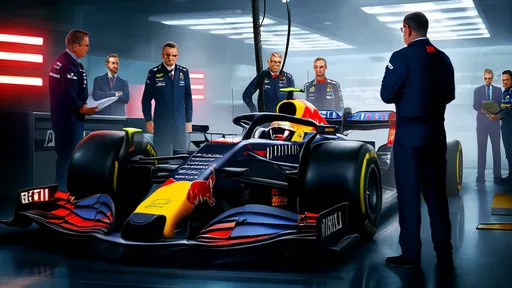
Red Bull's technical advantage became a focal point. Their 2022 car, the dominant RB18, won 17 of 22 races - prompting rivals to question whether their 2021 overspend had carried over into subsequent development. McLaren's Zak Brown wrote an explosive letter to the FIA claiming "the overspend breach constitutes cheating" that gave Red Bull "an unfair advantage this season and next."
The FIA's delayed response only intensified the drama. As weeks passed without punishment, conspiracy theories flourished. Had Red Bull struck a secret deal? Were the governing body afraid to punish their most marketable team? When the verdict finally came on October 28, 2022, it was a $7 million fine and 10% reduction in aerodynamic testing time - a punishment Horner called "draconian" while rivals deemed it "laughably light."
The fallout extended beyond the balance sheet. Verstappen's maiden title, won under controversial circumstances in Abu Dhabi 2021, now faced renewed scrutiny. Lewis Hamilton's fans argued the cost cap breach compounded the injustice of that race's controversial finish. Seven-time champion Hamilton himself remained diplomatic but pointed: "When the rules are the rules, they must apply equally to everyone."
The sporting implications became immediately apparent. Red Bull's reduced wind tunnel time (from 70% to 63% of the standard allocation) hampered their 2023 development. Early season struggles with the RB19's weight distribution and balance were attributed to this penalty. Meanwhile, Mercedes and Ferrari gained precious extra testing time - 75% and 80% allocations respectively - accelerating their development curves.
Perhaps more damaging was the reputational hit. Red Bull, long seen as F1's plucky disruptors, now faced accusations of being the establishment they once railed against. The Milton Keynes squad found itself cast as the villain in a narrative they'd previously used to their advantage. Horner's protestations that "this was an accounting dispute, not a performance advantage" fell on increasingly deaf ears.
The ripple effects extended throughout the paddock. The FIA announced stricter monitoring procedures for 2022 submissions, including earlier interim reporting. Several teams expanded their financial compliance departments, with Alpine creating a new "Cost Cap Czar" position. The controversy also accelerated discussions about expanding the cap to include driver salaries and power unit development.
Sponsorship dynamics shifted too. Oracle, Red Bull's title partner, reportedly sought reassurances about the team's compliance processes. Conversely, Mercedes leveraged the scandal in negotiations, with commercial director Richard Sanders telling sponsors "we play by the rules while others look for loopholes."
As the 2023 season progressed, the sporting consequences became undeniable. While Red Bull eventually overcame their aerodynamic handicap to dominate again, the early-season struggle cost them precious points. More significantly, the controversy had changed F1's political landscape. The previously unthinkable alliance of Mercedes, Ferrari and the smaller teams against Red Bull reshaped the sport's power dynamics.
The FIA found itself in the crosshairs too. Their delayed and opaque handling of the process drew criticism from all sides. New president Mohammed Ben Sulayem was forced to defend the governing body's independence, insisting "we acted without fear or favor" while announcing a complete overhaul of the Cost Cap Administration division.
Looking ahead, the Red Bull case has become a cautionary tale. The 2023 cap reduction to $135 million (with further decreases planned) comes alongside harsher penalties for breaches - including potential points deductions and race bans. Teams now understand that financial compliance carries equal weight to technical regulations.
The human cost shouldn't be overlooked either. Red Bull's financial director was reportedly "burned out" by the process, while several junior staffers left the team amid the pressure. At the FIA, two cost cap administrators resigned following what insiders called "unbearable political interference."
Ultimately, the Red Bull cost cap saga represents more than just a financial irregularity. It has exposed the tensions between F1's egalitarian aspirations and its cutthroat competitive nature. As the sport continues its transition from a spending war to an efficiency race, this controversy may well be remembered as the moment the new era truly began - not with the technical regulations in 2022, but with the financial reckoning that followed.
The final word perhaps belongs to Haas team principal Guenther Steiner, whose dark humor captured the paddock's mood: "First they tell us spending less is good, then they punish someone for not spending less enough. Only in Formula 1." As teams prepare their 2022 submissions under heightened scrutiny, one thing is certain - the balance between competitive ambition and financial restraint has become the defining challenge of modern F1.

By /Jun 15, 2025

By /Jun 15, 2025
By /Jun 15, 2025
By /Jun 15, 2025

By /Jun 15, 2025

By /Jun 15, 2025

By /Jun 15, 2025
By /Jun 15, 2025
By /Jun 15, 2025

By /Jun 15, 2025

By /Jun 15, 2025

By /Jun 15, 2025

By /Jun 15, 2025

By /Jun 15, 2025

By /Jun 15, 2025
By /Jun 15, 2025

By /Jun 15, 2025
