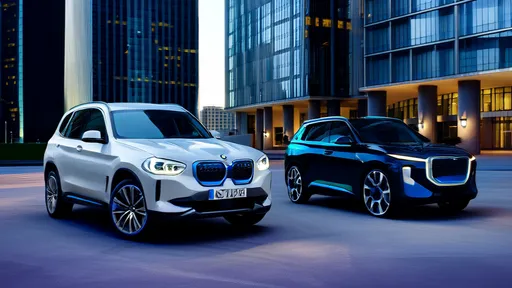
The electric vehicle landscape is witnessing an intriguing clash between established automotive royalty and ambitious newcomers. Two models embodying this confrontation are the BMW iX3, representing German engineering tradition, and the NIO ES6, showcasing Chinese technological ambition. This comparison goes beyond mere specifications - it's a philosophical debate about what defines premium mobility in the electrified age.
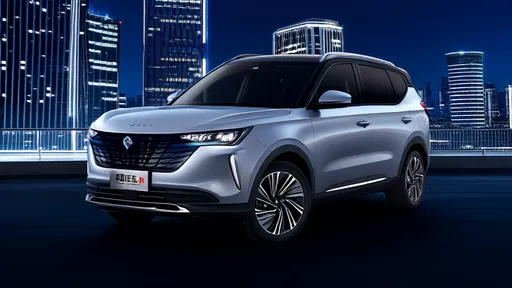
At first glance, these vehicles share similar footprints in the midsize SUV segment, yet their design languages speak different dialects. The iX3 maintains BMW's conservative evolution approach, looking like a mildly futuristic X3 with closed kidney grilles and blue accents. NIO's ES6 adopts what the industry calls "startup flamboyance" - slim matrix LED headlights, a floating roof design, and flush door handles that extend automatically. Where BMW whispers "electric," NIO shouts "disruption."
Powertrain configurations reveal fundamental differences in engineering philosophy. The rear-wheel-drive iX3 uses a single 286hp motor drawing energy from an 80kWh battery, delivering 460km CLTC range. NIO offers both dual-motor AWD configurations (435hp or 544hp) with 75kWh or 100kWh batteries achieving up to 625km CLTC range. More significantly, NIO provides battery-swapping capability - a 3-minute station exchange versus BMW's DC fast charging (10-80% in 32 minutes).
Interior spaces showcase contrasting interpretations of luxury. BMW's cabin is a masterclass in restrained premiumness - Vernasca leather, precisely damped controls, and intuitive iDrive 7.0 interface. The ES6 counters with a minimalist "living room" concept featuring sustainable microfiber fabrics, a vertically oriented 11.3-inch touchscreen, and NOMI, an AI assistant with physical presence through a rotating dashboard orb. Traditionalists may prefer BMW's tactile buttons, while tech enthusiasts gravitate toward NIO's voice-controlled ecosystem.
Where the iX3 truly differentiates itself is in driving dynamics. The rear-biased weight distribution and precisely tuned chassis deliver handling characteristics that feel distinctly BMW - sharp turn-in, progressive brake regeneration, and communicative steering. NIO prioritizes comfort with air suspension (optional on Performance trim) that glides over imperfections but lacks the same level of driver engagement. The ES6's acceleration (0-100km/h in 4.5s for Performance model) trumps the iX3's 6.8s, though real-world usability favors BMW's linear power delivery.
Technology integration highlights generational thinking. BMW's system focuses on driver assistance with well-calibrated lane keeping and adaptive cruise control. NIO implements NAD (NIO Autonomous Driving) featuring lidar-based navigation pilot that handles highway lane changes automatically. The ES6 also receives over-the-air updates improving functionality, whereas BMW's updates primarily address bug fixes rather than feature additions.
Ownership experiences diverge dramatically. BMW leverages its global dealership network for servicing but maintains conventional sales models. NIO's innovative approach includes battery-as-a-service (BaaS) subscriptions reducing upfront costs, mobile service vans, and NIO Houses - clubhouse-style spaces offering co-working and entertainment rather than traditional showrooms. The Chinese automaker also provides free lifetime battery swaps and roadside assistance, challenging traditional warranty structures.
Market positioning reveals strategic differences. The iX3 serves as BMW's electric entry point in many markets, priced approximately 15% below the ES6 before subsidies. NIO positions itself as a premium lifestyle brand, with pricing reflecting its larger battery options and technology content. Interestingly, residual values remain uncertain for both - traditional brand cachet versus emerging tech prestige.
Environmental considerations add another layer. BMW emphasizes sustainable production with recycled materials and renewable energy in manufacturing. NIO takes a holistic approach including battery recycling through its swap network and plans for second-life energy storage applications. Both companies offset carbon emissions, though their methodologies differ significantly.
The software experience may ultimately determine long-term satisfaction. iDrive remains industry-leading for intuitiveness but feels static compared to NIO's continually evolving interface. NIO's digital ecosystem integrates seamlessly with its mobile app for everything from remote preconditioning to community features. However, some users report occasional software bugs - a trade-off for cutting-edge functionality.
Charging infrastructure support varies by region. BMW relies on third-party networks plus selected partnerships. NIO is aggressively building its Power Swap stations (over 2,000 in China by 2023) while also supporting standard charging. For urban dwellers without home charging, NIO's swap system presents a compelling advantage where available.
Safety showcases both brands' strengths. The iX3 earned 5-star Euro NCAP ratings with robust passive safety. NIO emphasizes active safety through its Aquila super sensing system with 33 high-performance sensors. Real-world performance is excellent for both, though their approaches reflect different engineering priorities.
As the automotive world transitions to electrification, this comparison illustrates broader industry trends. BMW represents evolution - carefully adapting proven formulas to new technology. NIO embodies revolution - reimagining ownership models and user experiences. The iX3 delivers familiar excellence, while the ES6 offers ambitious innovation. Consumers must choose between the comfort of tradition and the excitement of reinvention.
Ultimately, these vehicles cater to different psychographics rather than demographics. The BMW iX3 suits those valuing driving purity and brand heritage. The NIO ES6 appeals to tech-forward buyers seeking comprehensive ecosystem integration. As both traditional automakers and startups refine their approaches, this rivalry will only intensify - to the benefit of electric vehicle consumers worldwide.

By /Jun 15, 2025
By /Jun 15, 2025
By /Jun 15, 2025
By /Jun 15, 2025

By /Jun 15, 2025
By /Jun 15, 2025

By /Jun 15, 2025
By /Jun 15, 2025
By /Jun 15, 2025
By /Jun 15, 2025
By /Jun 15, 2025
By /Jun 15, 2025
By /Jun 15, 2025
By /Jun 15, 2025
By /Jun 15, 2025
By /Jun 15, 2025
By /Jun 15, 2025
