The world of motorsport is no stranger to extreme challenges, but few competitions push man and machine to their absolute limits like the annual 24-hour ice rally held in the frozen wilderness of northern Finland. This year's event saw temperatures plummet to -30°C (-22°F), creating conditions that would make even the most seasoned winter drivers think twice before hitting the accelerator.
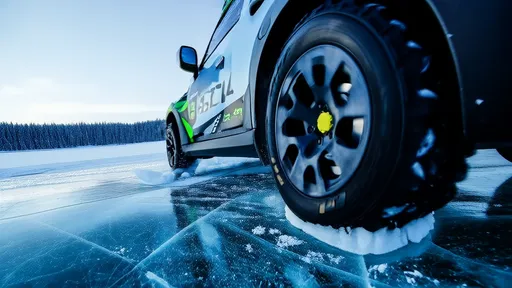
What sets this endurance race apart from other winter motorsports isn't just the subarctic temperatures or the complete darkness that envelops the track for nearly 18 hours each day. The real game-changer comes down to one critical element: the tires. Or more specifically, the brutal yet brilliant tire spike tactics that teams employ to maintain traction on surfaces smoother than glass.
The Science of Grip in Extreme Conditions
At these temperatures, conventional winter tires might as well be racing slicks. The ice becomes so hard that rubber compounds lose all flexibility, rendering tread patterns virtually useless. This is where the controversial but necessary spike systems come into play. Teams are allowed a maximum of 1,200 tungsten-carbide spikes per tire, each protruding no more than 2mm from the surface. The arrangement of these spikes becomes a closely guarded secret among top teams, with patterns sometimes varying between the front and rear axles depending on the car's weight distribution.
During daylight hours, when the sun briefly makes an appearance, the spikes chew through the ice surface, creating what drivers call "sugar snow" - a granular surface that paradoxically offers better grip than untouched ice. But as temperatures drop further after sunset, this advantage disappears, and teams must rely entirely on their spike configurations and driving skill.
The Maintenance Marathon
What spectators rarely see is the tire maintenance happening in the pits. Every 2-3 hours, cars come in for what crews call "spike checks." Using specialized gauges, mechanics measure remaining spike length down to tenths of a millimeter. At the rate these spikes wear down - sometimes losing 0.5mm per hour - teams must carefully calculate when to switch to fresh tires without wasting precious seconds on unnecessary pit stops.
The most innovative teams have developed real-time spike monitoring systems using vibration sensors that alert drivers when spike effectiveness drops below optimal levels. This technology, adapted from aerospace bearing monitors, has become the latest arms race in winter endurance racing.
Driver Adaptation to Extreme Conditions
Human factors play an equally crucial role in this frozen challenge. Drivers report that at -30°C, the car behaves completely differently than at merely -15°C. Hydraulic fluids thicken, changing brake response times. Shock absorbers move slower, altering handling characteristics. Even the air in the tires contracts enough to affect suspension geometry.
The most successful drivers develop an almost sixth sense for detecting minute changes in grip levels. "You learn to read the ice like a book," explains three-time winner Mika Koskinen. "There's a particular sound the spikes make when they're about to lose purchase, a sort of high-pitched scraping noise that comes a half-second before you feel it in the wheel."
The Tactical Chess Match
Strategy becomes a multi-layered puzzle. Teams must balance spike durability against grip performance, knowing that harder spike alloys last longer but provide less traction. Some teams opt for aggressive early spikes that dominate the first six hours but require more frequent changes later. Others choose conservative patterns that maintain consistency but never deliver peak performance.
The current reigning champions, Team Arctic Fox, pioneered what's now called the "variable penetration" approach. Their custom spikes feature tiny grooves that collect ice particles, which then freeze into microscopic traction bumps. This self-generating grip system works exceptionally well during temperature fluctuations but requires precise pressure management to function properly.
Night Racing: A Different Beast Entirely
As darkness falls and temperatures reach their lowest points, the race transforms. Headlights reflect off the ice in disorienting ways, creating what drivers describe as "driving through a hall of mirrors." Depth perception becomes nearly impossible, forcing teams to rely on rhythm and memory more than visual cues.
The night segment also brings unexpected advantages for some teams. Those who invested in heated spike systems (where tiny electrical currents keep the metal slightly warmer than the surrounding ice) find their spikes maintain better penetration when others are struggling. However, this comes at the cost of additional battery weight and complexity.
The Human Endurance Factor
While much attention focuses on the mechanical challenges, the human endurance aspect is equally staggering. Drivers wear specially designed heated suits that must maintain core temperature without causing sweating (which could lead to dangerous cooling). Nutrition becomes a science - foods that can be consumed quickly but provide sustained energy without digestive discomfort.
Perhaps most impressive is the drivers' ability to maintain concentration. At these temperatures, reaction times naturally slow, and the monotony of the ice can induce a sort of hypnotic state. Teams employ various countermeasures, from blinking light systems in the cockpits to specially formulated oxygen mixes breathed through helmets during pit stops.
The Final Hours: A Test of Will
As dawn approaches and the race enters its final quarter, the leaderboard often sees dramatic shifts. Cars that seemed indestructible begin showing stress fractures in suspension components. Spike wear reaches critical levels, with some teams gambling on stretching their final set of tires beyond recommended limits.
The 2024 event saw one of the most spectacular finishes in race history when the top three cars crossed the line within 47 seconds of each other after 24 hours of racing. Post-race inspection revealed the winning car had just 17% of its spikes remaining within legal length limits - a calculated risk that paid off spectacularly.
This extreme motorsport event continues to push the boundaries of automotive engineering and human performance. Each year brings new innovations in traction technology, with lessons learned on these frozen lakes eventually trickling down to consumer winter tires and safety systems. For the teams that compete, it's not just about victory - it's about mastering one of the most hostile racing environments on Earth.
By /Jun 15, 2025
By /Jun 15, 2025
By /Jun 15, 2025
By /Jun 15, 2025

By /Jun 15, 2025
By /Jun 15, 2025
By /Jun 15, 2025
By /Jun 15, 2025
By /Jun 15, 2025

By /Jun 15, 2025
By /Jun 15, 2025

By /Jun 15, 2025

By /Jun 15, 2025

By /Jun 15, 2025

By /Jun 15, 2025

By /Jun 15, 2025

By /Jun 15, 2025
