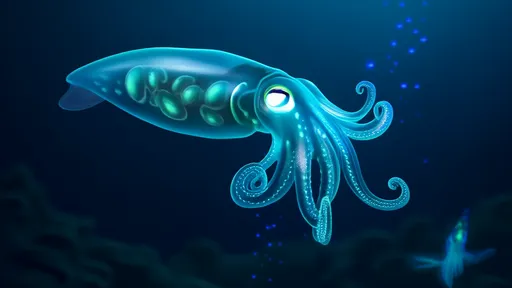
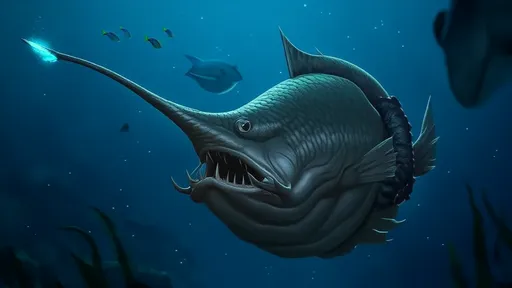
In the dark, crushing depths of the ocean, where sunlight never reaches and pressures are extreme, one of nature’s most bizarre and fascinating reproductive strategies has evolved. The anglerfish, a creature already notorious for its grotesque appearance and bioluminescent lure, takes intimacy to an extreme few species can match. In some species, the male anglerfish does not just mate with the female—he fuses with her, becoming a permanent, parasitic appendage for the rest of his life. This extraordinary adaptation is a testament to the lengths evolution will go to ensure survival in one of Earth’s most inhospitable environments.
The deep sea is a world of scarcity. Food is rare, encounters between individuals are infrequent, and the energy required to simply exist is immense. For anglerfish, finding a mate in this vast, lightless expanse is a challenge that borders on impossible. To overcome this, some species have developed a solution so extreme it defies conventional understanding of animal behavior: sexual parasitism. The male, dwarfed by the female, latches onto her with sharp teeth and secretes enzymes that dissolve his own flesh, fusing his circulatory system with hers. Over time, he loses his eyes, fins, and even internal organs, becoming little more than a sperm-producing sac attached to the female’s body.
This bizarre arrangement is not just a quirk of nature—it’s a finely tuned survival strategy. The female, who can grow to sizes far larger than the male, provides a steady stream of nutrients through their shared bloodstream. In return, the male ensures she has immediate access to sperm whenever she is ready to reproduce. For a species living in an environment where encounters between mates might happen once in a lifetime, this fusion guarantees reproductive success. The male’s sacrifice is, in evolutionary terms, a small price to pay for the continuation of his genes.
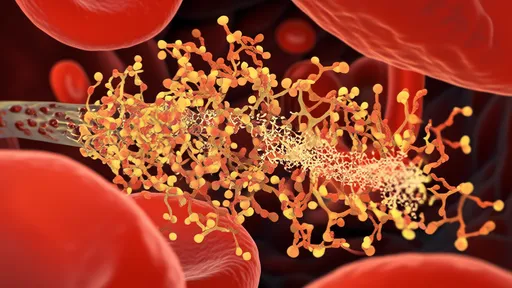
The mechanics of this union are as grotesque as they are fascinating. When a male anglerfish encounters a female, he bites into her flesh, often near her belly or flank. His mouth secretes enzymes that break down the skin and underlying tissues, allowing his body to physically merge with hers. Blood vessels from both fish intertwine, creating a direct connection between their circulatory systems. Over time, the male’s body atrophies. His eyes, no longer needed in the perpetual darkness, degenerate. His digestive system, now redundant, shrivels away. What remains is a pair of gonads, perpetually ready to release sperm at the female’s command.
Scientists first discovered this phenomenon in the early 20th century, but it wasn’t until deep-sea exploration advanced that the full extent of this relationship became clear. Some females have been found with multiple males attached, each reduced to little more than a bump on her skin. The exact triggers for this fusion—whether chemical signals, pheromones, or sheer luck—remain a subject of ongoing research. What is certain is that this strategy is unique to certain species of anglerfish, particularly those in the families Ceratiidae and Linophrynidae.
The evolutionary implications of this reproductive strategy are profound. In most species, sexual selection favors traits that make males more attractive or competitive. But in these anglerfish, the pressure is reversed: selection favors males who can find and fuse with a female as quickly as possible. This has led to males evolving into tiny, streamlined forms, with enlarged olfactory organs to detect females from a distance. Females, meanwhile, grow large enough to support multiple parasitic mates, ensuring a constant supply of sperm throughout their lifetimes.
From a human perspective, the idea of permanent physical fusion with a mate seems like something out of a horror story. But in the deep sea, where survival hinges on extreme adaptations, the anglerfish’s strategy is a masterpiece of efficiency. It eliminates the need for repeated mate-finding in an environment where such encounters are vanishingly rare. It ensures that energy is not wasted on maintaining separate bodies when one will suffice. And most crucially, it guarantees that reproduction can occur whenever conditions are right, without the uncertainty of finding a partner in the abyss.
This phenomenon also raises intriguing questions about individuality and symbiosis. At what point does the male cease to be an independent organism and become an organ of the female? The line between parasitism and mutualism blurs in this relationship. While the male benefits by ensuring his genes are passed on, the female gains a lifetime supply of sperm without the need to expend energy searching for mates. In a sense, they become a single reproductive unit, a fusion of two organisms into one functioning whole.
The anglerfish’s reproductive strategy is a stark reminder of how different life can be in the deep sea. In an environment where the rules of survival are rewritten by crushing pressures, eternal darkness, and scarce resources, evolution takes paths that seem unimaginable in our sunlit world. The male anglerfish’s fate—to become a permanent, parasitic extension of his mate—is both horrifying and awe-inspiring. It is a testament to the creativity of nature, where even the most extreme solutions can arise if they offer a chance at survival in the abyss.
By /Jun 9, 2025
By /Jun 9, 2025

By /Jun 9, 2025
By /Jun 9, 2025
By /Jun 9, 2025
By /Jun 9, 2025
By /Jun 9, 2025
By /Jun 9, 2025
By /Jun 9, 2025
By /Jun 9, 2025
By /Jun 9, 2025
By /Jun 9, 2025
By /Jun 9, 2025

By /Jun 9, 2025

By /Jun 9, 2025
By /Jun 9, 2025
By /Jun 9, 2025
