The remarkable ability of camels to survive in arid environments has long fascinated scientists. Among their many physiological adaptations, the unique structure of camel erythrocytes—red blood cells—stands out as a masterstroke of evolutionary engineering. These specialized cells play a crucial role in enabling these desert dwellers to withstand extreme dehydration that would prove fatal to most mammals.
A Shape-Shifting Marvel
Unlike the biconcave disc shape characteristic of human red blood cells, camel erythrocytes exhibit an extraordinary elliptical form when fully hydrated. This distinctive morphology isn't merely cosmetic; it represents a sophisticated biological solution to the challenges of desert life. The elliptical shape provides these cells with a geometric advantage, allowing them to undergo dramatic deformation without compromising their structural integrity.
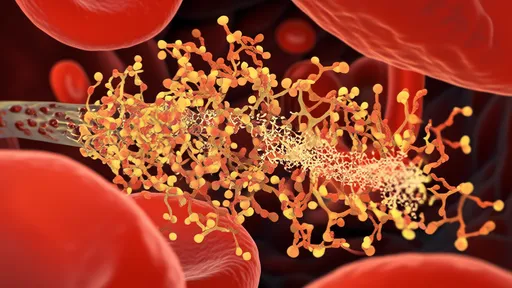
When dehydration strikes, these remarkable cells demonstrate their true capabilities. As water becomes scarce in the camel's body, the erythrocytes transform, becoming increasingly elongated and adopting a more streamlined profile. This shape-shifting ability maintains blood flow even as viscosity increases—a common problem in dehydrated mammals that often leads to circulatory failure.
The Membrane Advantage
The secret to this cellular contortion lies in the unique composition of the erythrocyte membrane. Camel red blood cells contain higher concentrations of certain phospholipids and cholesterol molecules that grant exceptional flexibility. These biochemical adaptations create a membrane that behaves more like a stretchable fabric than the rigid enclosure found in other species.
Research has revealed another surprising feature: the membrane's protein architecture differs significantly from that of other mammals. The cytoskeletal network—the internal scaffolding that maintains cell shape—contains modified spectrin proteins that allow for greater elasticity. This molecular innovation enables the cells to withstand the mechanical stress of repeated deformation during cycles of hydration and dehydration.
Osmotic Champions
Camels routinely face dramatic fluctuations in blood osmolarity as they go extended periods without water, then rehydrate by consuming massive quantities in minutes. Their erythrocytes have evolved to handle these osmotic shocks with remarkable resilience. Where other mammalian red blood cells would lyse (burst) under such conditions, camel erythrocytes maintain their structural integrity.
This extraordinary tolerance stems from multiple adaptations. The cells contain specialized organic osmolytes—small molecules that help regulate cellular volume without disrupting normal function. Additionally, their membrane transporters work differently, allowing for more precise control of ion concentrations during periods of water scarcity.
Flow Dynamics in Dehydration
As camels become dehydrated, their blood undergoes significant changes in viscosity. In most mammals, this would lead to dangerous increases in blood pressure and potential capillary blockage. Camel erythrocytes circumvent this problem through their deformation capability, which reduces resistance to flow.
The elliptical shape becomes particularly advantageous in this context. When navigating narrow capillaries, these cells can align themselves with the direction of flow, presenting a minimal cross-sectional area. This orientation, combined with their ability to fold lengthwise, allows them to pass through constrictions that would trap less adaptable cells.
Metabolic Adaptations
The story of camel erythrocytes extends beyond physical structure to include specialized metabolic pathways. These cells operate efficiently across a wide range of temperatures, crucial for an animal that experiences dramatic daily temperature fluctuations in desert environments.
Their glycolytic pathway—the process by which cells generate energy—contains modifications that maintain ATP production even during periods of dehydration stress. This ensures the erythrocytes can continue performing their oxygen-transport duties despite challenging internal conditions.
Evolutionary Implications
The unique properties of camel erythrocytes didn't emerge overnight. They represent millions of years of evolutionary refinement in response to the relentless pressures of desert survival. Comparative studies with other desert-adapted species reveal both convergent evolution and unique camel-specific adaptations.
Interestingly, newborn camels don't initially possess these specialized erythrocytes. Their red blood cells more closely resemble those of other mammals at birth, gradually developing the distinctive elliptical shape and associated adaptations as they mature—a fascinating example of developmental adaptation mirroring evolutionary history.
Medical Research Applications
The study of camel erythrocytes isn't merely academic curiosity. Researchers are investigating how these cells' properties might inform human medicine, particularly in treating conditions involving dehydration or blood flow abnormalities.
Potential applications include developing better blood substitutes for trauma patients, improving preservation techniques for donated blood, and creating novel treatments for circulatory disorders. The camel's solution to dehydration challenges may one day help address human medical challenges.
From their unique elliptical shape to their extraordinary membrane flexibility, camel erythrocytes represent one of nature's most elegant solutions to environmental extremes. These cellular marvels enable their hosts to thrive where few other large mammals could survive, offering profound insights into the plasticity of life and the power of evolutionary adaptation.

By /Jun 9, 2025

By /Jun 9, 2025
By /Jun 9, 2025

By /Jun 9, 2025

By /Jun 9, 2025

By /Jun 9, 2025
By /Jun 9, 2025
By /Jun 9, 2025
By /Jun 9, 2025
By /Jun 9, 2025
By /Jun 9, 2025

By /Jun 9, 2025

By /Jun 9, 2025

By /Jun 9, 2025

By /Jun 9, 2025

By /Jun 9, 2025

By /Jun 9, 2025
