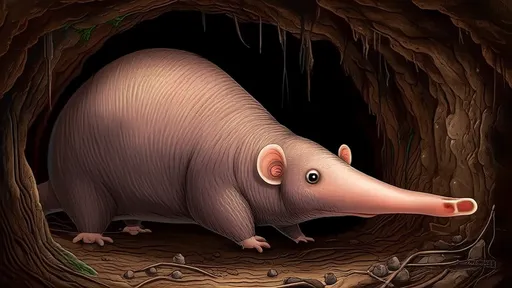
In the shadowy underground world where blind moles spend their lives tunneling through soil, scientists have uncovered an extraordinary biological secret: these unassuming creatures possess a natural resistance to cancer that could rewrite medical textbooks. The star-nosed mole and its subterranean cousins have evolved genetic defenses so effective that researchers have never documented a single case of spontaneous cancer in these animals. This remarkable discovery has sent ripples through the oncology community, offering tantalizing clues about how we might one day conquer humanity's most feared disease.
The story begins with a peculiar observation – while cancer strikes nearly all complex organisms from elephants to oysters, these underground dwellers seem mysteriously immune. Their bodies have developed what amounts to a biological fortress against uncontrolled cell growth, a system so refined that it prevents malignancies before they can take root. When scientists exposed mole cells to potent carcinogens that would transform human or mouse cells into cancerous variants, the mole cells simply refused to cooperate, dying gracefully rather than mutating into tumor-forming renegades.
Deep within their DNA, moles carry an enhanced version of what researchers call "tumor suppressor genes." These molecular guardians monitor cell division with extraordinary precision, shutting down any cell that shows the slightest hint of going rogue. The most fascinating aspect isn't just that these genes exist – humans have similar versions – but rather how mole biology has amplified their effectiveness through evolutionary pressure. Underground life, with its low oxygen environment and high cellular stress, appears to have selected for these supercharged cancer defenses over millions of years.
One particular gene, called p53, functions with remarkable efficiency in mole cells. Often called "the guardian of the genome" in humans, this protein triggers damaged cells to self-destruct before they can become cancerous. In moles, p53 operates with near-perfect accuracy, never allowing compromised cells to slip through its protective net. Researchers have found that mole cells enter a state called "hyper-senescence" at the first sign of DNA damage – essentially putting themselves into permanent retirement rather than risking uncontrolled division.
The subterranean lifestyle may hold the key to understanding this phenomenon. Living in low-oxygen burrows subjects mole cells to constant stress that would damage human cells. Over evolutionary time, moles didn't just adapt to survive these conditions – they developed cellular mechanisms that turn potential weaknesses into strengths. What would kill our cells merely activates their enhanced protective systems, creating a biological scenario where the very factors that typically cause cancer in other animals actually reinforce moles' defenses against it.
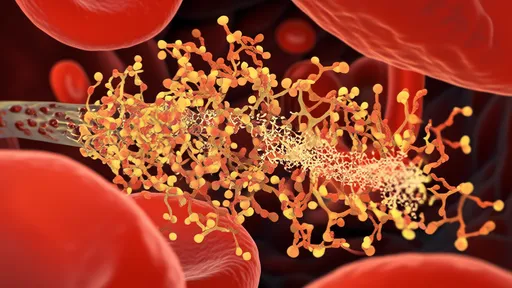
Scientists are now racing to decode the precise molecular mechanisms behind this natural cancer resistance. Early experiments suggest that moles produce unique variants of hyaluronan – a sugary substance that fills the spaces between cells. Unlike the human version, mole hyaluronan forms extremely long chains that create a physical barrier against uncontrolled cell growth. When researchers blocked hyaluronan production in mole cells, they became vulnerable to cancer formation, confirming this substance's critical protective role.
The implications for human medicine are profound. While we can't simply copy mole biology into humans, understanding these natural defenses provides blueprints for new therapeutic approaches. Some researchers are investigating whether modified versions of mole hyaluronan could be used to create anti-cancer environments in human tissues. Others are studying how to enhance our p53 genes to function with mole-like precision without causing excessive cell death in healthy tissue.
This research also challenges fundamental assumptions about cancer susceptibility. For decades, scientists believed larger, longer-lived animals should develop more cancers simply because their cells have more opportunities to accumulate dangerous mutations. The naked mole rat – another cancer-resistant subterranean species – can live thirty years or more without developing tumors, defying this conventional wisdom. Their existence proves that evolution can craft solutions to biological problems we consider inevitable, offering hope that human ingenuity might one day do the same.
Beyond direct medical applications, the mole's cancer resistance provides fascinating insights into evolutionary biology. It demonstrates how environmental pressures can shape organisms in unexpected ways, producing solutions to challenges before those challenges become life-threatening. The underground world, with its unique combination of low oxygen, high carbon dioxide, and constant physical pressure, created conditions where cancer resistance became not just advantageous but essential for survival.
As research continues, scientists are exploring whether other subterranean mammals share similar cancer defenses. Preliminary studies suggest varying degrees of resistance among different mole species, hinting at multiple evolutionary paths to the same biological endpoint. This diversity offers researchers a natural laboratory to compare different anti-cancer mechanisms, potentially revealing which strategies might be most adaptable to human medicine.
The humble mole's gift to medical science continues to unfold in laboratories worldwide. What began as curiosity about an odd biological outlier has blossomed into one of the most promising frontiers in cancer research. While translating these findings into human treatments will require years of careful study, the moles have already taught us a vital lesson: nature often holds solutions to our most intractable medical problems, if we know where to look and how to listen.
By /Jun 9, 2025

By /Jun 9, 2025

By /Jun 9, 2025

By /Jun 9, 2025

By /Jun 9, 2025
By /Jun 9, 2025

By /Jun 9, 2025
By /Jun 9, 2025
By /Jun 9, 2025
By /Jun 9, 2025

By /Jun 9, 2025

By /Jun 9, 2025

By /Jun 9, 2025

By /Jun 9, 2025

By /Jun 9, 2025
By /Jun 9, 2025
By /Jun 9, 2025
